
Electronic invoicing in Belgium: strong adoption, but quality gaps remain
22/01/2026 - Published by : FiduPress < Back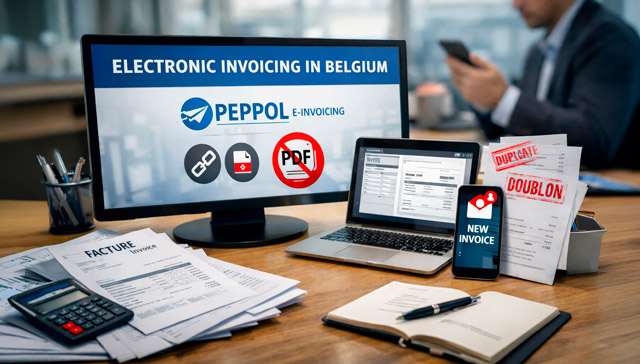
As of 22 January 2026, the adoption of electronic invoicing in Belgium has clearly accelerated. Driven by the upcoming 2026 mandate and the widespread use of the PEPPOL network, more and more companies are now able to send and receive structured electronic invoices.
However, real-world experience shows that not all implementations deliver the same level of quality. Behind the encouraging adoption figures, several structural issues persist.
PEPPOL invoices without PDF: a critical shortcoming
One recurring issue is that some suppliers send PEPPOL invoices without including the PDF version of the invoice.
While the structured data (UBL) may be technically correct, the absence of a PDF creates multiple problems:
- Disruption of recipient habits
Accountants and business owners still rely heavily on a clear visual invoice for quick understanding. - Dependence on the recipient’s Access Point
When no PDF is included, the Access Point must generate a visual rendering, leading to inconsistencies between platforms. - Potential confusion
Poor formatting, unclear presentation or missing context may raise doubts, even when the invoice data itself is correct.
Ironically, small businesses often integrate the PDF correctly, while larger organizations are frequently missing this essential component.
Authentication and verification issues
Another concern lies in authentication problems observed at certain Access Points.
These issues are often linked to:
- insufficient onboarding quality,
- lack of training,
- incomplete verification of beneficial owners (UBO checks).
Such shortcomings weaken trust in the system and lead to unnecessary disruptions.
Duplicates and excessive notifications
A further inefficiency stems from duplicate transmissions and over-notification:
- automatic alerts from the Access Point,
- additional invoice copies sent by email by suppliers,
- sometimes multiple parallel invoice versions.
This overload causes confusion, duplicate processing and extra work — undermining the very purpose of electronic invoicing.
A solid concept that still needs refinement
Electronic invoicing remains a highly valuable initiative for Belgium.
To fully realize its potential, several improvements are essential:
- consistent inclusion of the PDF invoice,
- stronger and more reliable authentication processes,
- reduction of duplicate communications,
- greater focus on usability.
Electronic invoicing must not only be compliant, but also clear, efficient and user-friendly.
Back